How Long Does a Bathroom Renovation Take? A Stage-by-Stage UK Timeline
A typical full bathroom renovation takes around 5 to 10 working days on site, but 4 to 6 weeks from saying yes to using the room, once design, ordering and delivery lead times are added. The figures you see online disagree because some count only the fitting days and others count the whole project. These are typical industry ranges, not a promise for every room.
We're CJS Heating & Plumbing, based in Lightwater with 15 years in the trade. Our bathroom renovation service uses one team from strip-out through tiling to finish, so we see every stage from the inside. Here's how the days actually go, when you can use the room again, and what holds jobs up.
Key facts
- On site: around 5 to 10 working days for a standard full refit (typical industry range).
- Start to finish: around 4 to 6 weeks, mostly design, ordering and deliveries.
- Like-for-like swap: typically 2 to 4 days if nothing moves.
- Tiling is the swing factor. Large-format tiles, niches and patterns add days.
- First shower: BAL's grout data sheet says not to use a shower for at least 2 weeks after grouting.
How long does a bathroom renovation take: days on site vs total weeks
It depends which clock you're looking at. Fitters quote days on site. You live with the whole project.
| Clock | What it covers | Typical range |
|---|---|---|
| Working days on site | Strip-out to handover, the days the team is in your house | 5 to 10 working days for a full refit |
| Total elapsed time | Quote, design, ordering, lead times, fitting, snagging | 4 to 6 weeks |
| Until the shower is used | Fitting plus grout cure time | At least 2 weeks after grouting, per BAL (see below) |
The wait between saying yes and the start date comes down to the fitter's diary and how quickly the suite and tiles turn up. Nothing should be ordered until someone has measured the room properly. Sort out at the quote stage who's supplying what, too. A job can stall on day one because the basin waste or the tray riser kit was never in the box.
The bathroom renovation stages, in order
Each stage has to finish before the next one starts. That's why you can't speed a bathroom up by throwing more people at it; there's only room for a couple of people to work in there anyway.
| Stage | What happens | Typical on-site time | Can you use the room? |
|---|---|---|---|
| 1. Survey and ordering | Measure, agree layout, order suite, tiles and fittings | Before start date | Yes, as normal |
| 2. Strip-out | Old suite, tiles and flooring removed; water isolated | Around 1 day | No |
| 3. First fix | New pipework, waste runs and any wiring routed in walls and floor | 1 to 2 days | No (WC may be refitted temporarily) |
| 4. Boarding, plaster and tanking | Walls and floor boarded or levelled; wet areas waterproofed | 1 to 2 days, plus drying | No |
| 5. Tiling and grouting | Walls and floor tiled, then grouted | 2 to 4 days | No |
| 6. Second fix | Bath or tray, WC, basin, taps, shower, radiator and lighting connected | 1 to 2 days | WC and basin usually yes by the end |
| 7. Silicone, snagging and handover | Sealant, final checks, clean-up | Around 1 day | Yes, gently |
| 8. Cure period | Grout and sealant reach full strength | At least 2 weeks for the shower | Toilet and basin yes; shower wait |
Those are typical times for a standard family bathroom. Strip-out is the noisy, dusty day. Once the old tiles are off you'll often find patched plaster or a bodged joint behind them, and that's normal in older houses.
Which jobs take longer?
Scope matters far more than size. A small room with a walk-in shower and a niche can easily take longer than a big room where everything stays put. Here's how our own jobs from the gallery line up against the usual tiers.
| Scope | Typical on-site time | Our example |
|---|---|---|
| Like-for-like swap (same layout, same positions) | 2 to 4 days | n/a |
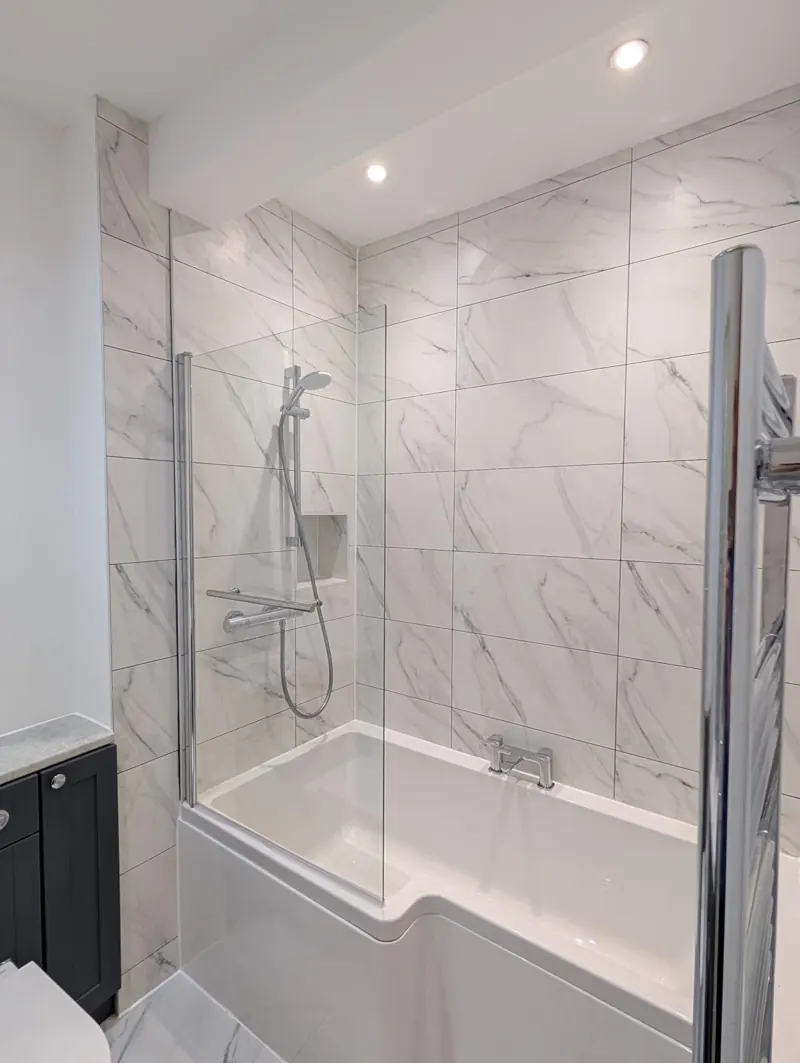
| Strip back and rebuild | 5 to 10 working days | Family bathroom with P-shaped shower bath: marble-effect walls, shower bath with screen, vanity, towel radiator |
| Large-format tiles | Towards the top of the range | Marble shower bath with black fittings: large-format tiles, fixed screen, bronze ladder radiator |
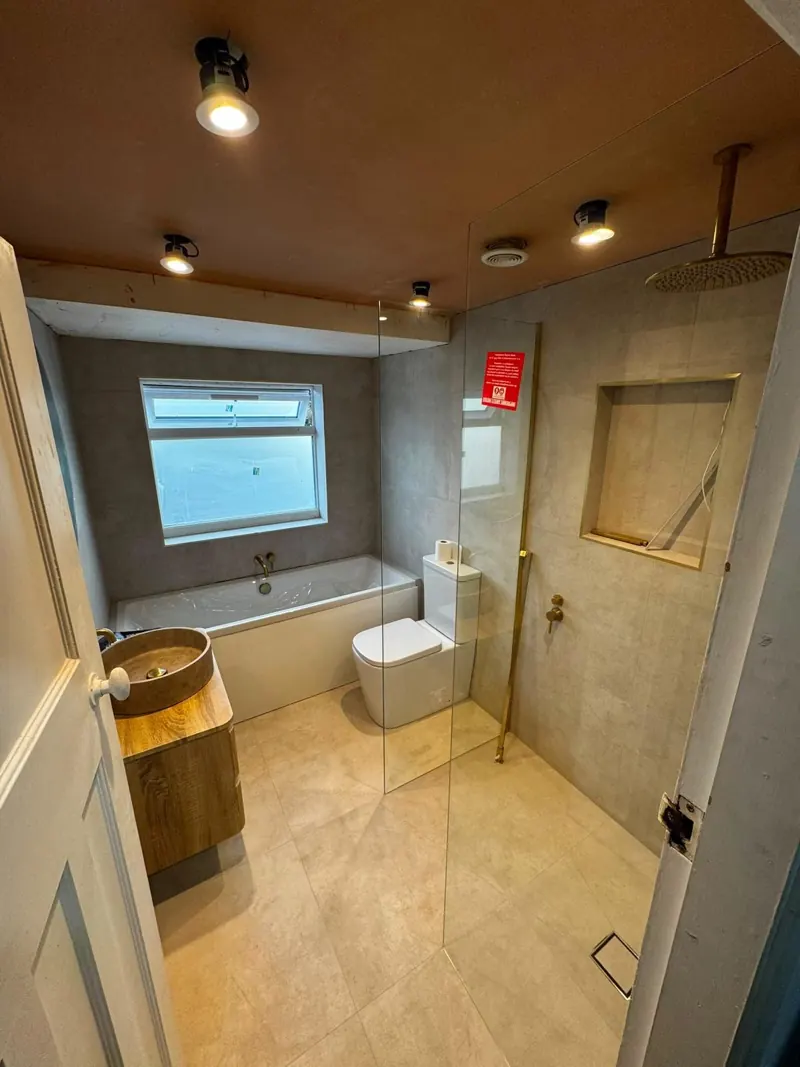
| Walk-in shower, niche, freestanding bath | Longer than a standard refit | Oak vanity and brushed brass bathroom: walk-in shower with niche, freestanding bath, oak vanity with vessel basin |
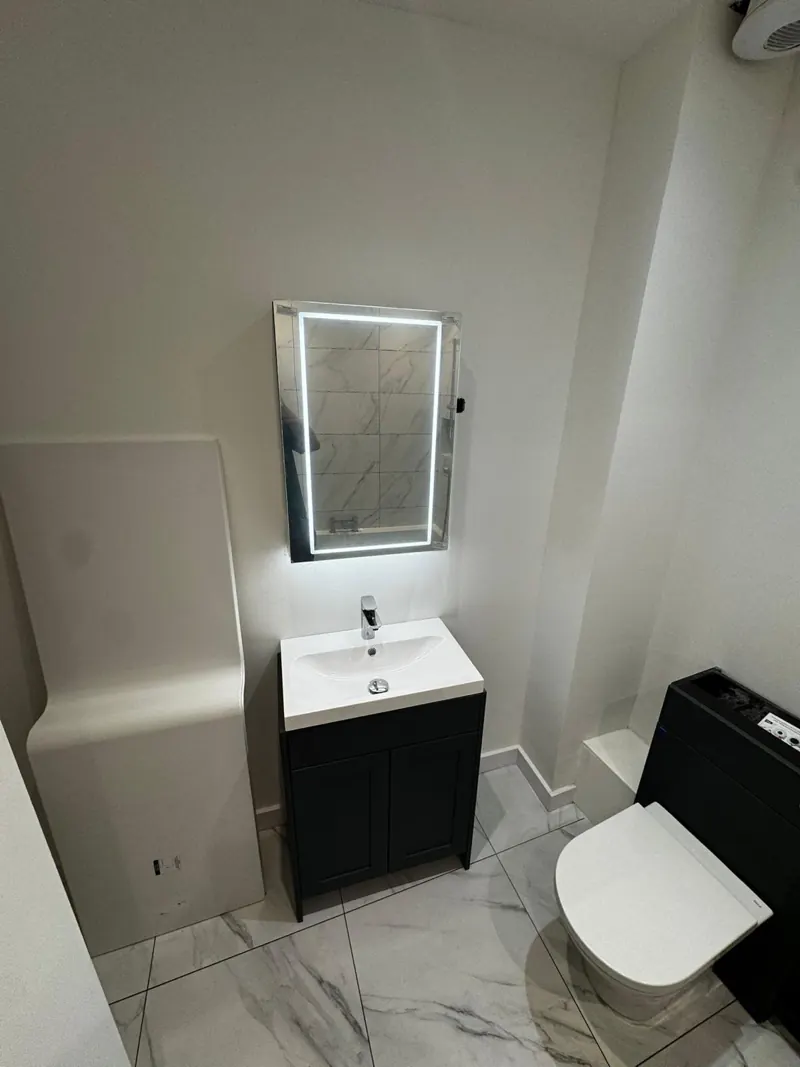
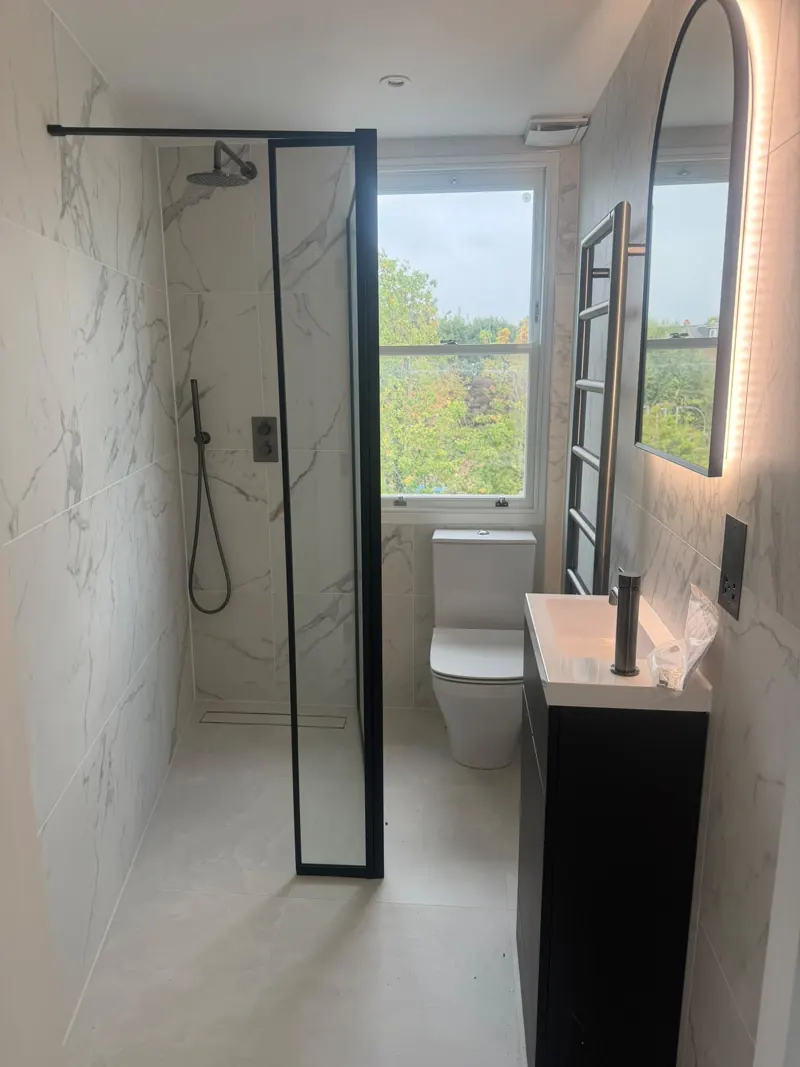
| Shower room with lit mirror | Depends on electrics | Walk-in shower room: black-framed screen, wall-hung vanity, illuminated arched mirror |
| Two rooms in one job | Longer; depends on sequencing | Grey stone bathroom and cloakroom: stone-effect panels, double vessel basins, brass fittings |
Walk-in showers are the usual culprit. The floor has to fall to the drain, the whole wet area gets tanked and left to dry, and a niche means more cuts and more mitred corners. A freestanding bath needs its waste run under the floor before a single floor tile goes down, and the bath has to sit dead level over it.
How long will you be without a toilet and shower?
Without a toilet: ideally never overnight. A good fitter will put the WC back on at the end of each day, or leave a temporary connection, rather than leave a family without one. You'll be without a shower from strip-out until second fix, and then for a while longer while the grout cures.
Before you book anyone, ask them straight out: will the loo go back on every night, how many nights without a shower, and do you need to hire a temporary toilet?
A second bathroom, an en-suite or even a downstairs cloakroom makes the whole thing far easier. With more than one, we plan the work so there's always one working. One customer had several rooms done with us:
"We had a full renovation of one bathroom and improvements to two others. … the team were excellent. Great workmanship. Pleasant hardworking team. Very highly recommended." (Paula N.)
If it's your only bathroom, tell us when we quote. And sort out the gym or a neighbour's shower before day one, not on day three.
How long after grouting can you use the shower?
Longer than most people expect. Grout feels rock hard within a day. It isn't cured.
BAL, one of the main UK tile adhesive makers, says on its Grout Flex technical data sheet to wait a minimum of 24 hours before tiles go into normal service, and not to use a shower for at least 2 weeks after grouting is complete, citing BS 5385 Part 4. It also says drying takes longer in colder rooms and with low-porosity tiles such as porcelain.
So the room can look finished and the shower still needs leaving alone. Other grouts have their own times. Ask your fitter which grout and sealant went in, and check the cure time for each before you turn the shower on. Two weeks feels like an age when the room's sitting there gleaming, but it beats cracked grout and water getting behind the tiles.
What slows a bathroom renovation down?
Nine times out of ten it's something hidden under the floor or a decision made late:
- Hidden damage. Rotten joists or boards soaked by an old leak only show once the floor's up. They have to be put right before anything goes back down.
- Lead times. One tile on back order can hold up the whole room. We want everything on site before strip-out.
- Moving the soil pipe. Move the WC and you're moving the 110mm waste. That can mean floor work, a new route or a macerator pump, and connecting to the main stack can need building control.
- Large-format tiles. Big tiles show every dip in a wall. They need flatter backgrounds, more prep and two people to lift and bed them.
- Late design changes. Moving a basin after first fix means the pipework comes back out.
- Extra electrics. Lit mirrors, shaver sockets, extractor fans and underfloor heating all add work in a regulated zone (see below).
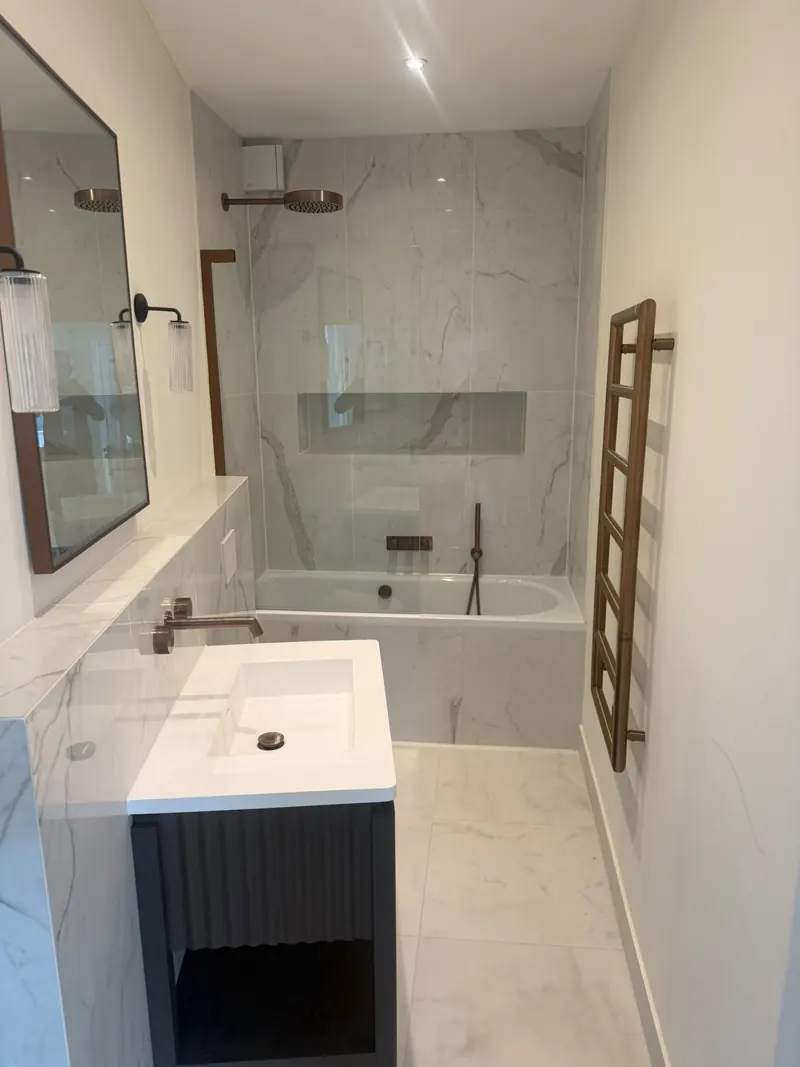
Tiling is where care shows most, and where rushing shows worst: lippage between tiles, grout lines that wander, cuts that don't line up round the window. One customer said:
"Exceptional work … very please with the tiling." (Rob B.)
Do you need building regulations for a bathroom refit?
Usually not for a straight replacement, but drainage and electrical work can need it. The Planning Portal guide on building regulations approval for kitchens and bathrooms says a refit does not generally need approval, but new drainage or electrical work may.
Electrics are the bit to watch. The Planning Portal's electrics and building regulations page says that in England the spaces around baths and showers are "special locations". Work there falls under Part P, set out in Approved Document P on GOV.UK. A registered electrician can self-certify it, so nobody waits on a building control visit.
When you're getting quotes, ask who's doing the electrics and whether they can self-certify.
Why one team beats five trades
Ask anyone why their bathroom overran and you'll usually hear the same story. The trades came one after another and somebody turned up late. If the plumber finishes on Tuesday and the tiler can't start until the following Monday, that's four days of a stripped room doing nothing.
We do bathrooms with one team from strip-out through tiling to finish. It won't make grout cure any faster. What it does is cut out the dead days between stages, and the people tiling the walls already know where every pipe runs behind them, so nobody drills through a feed.
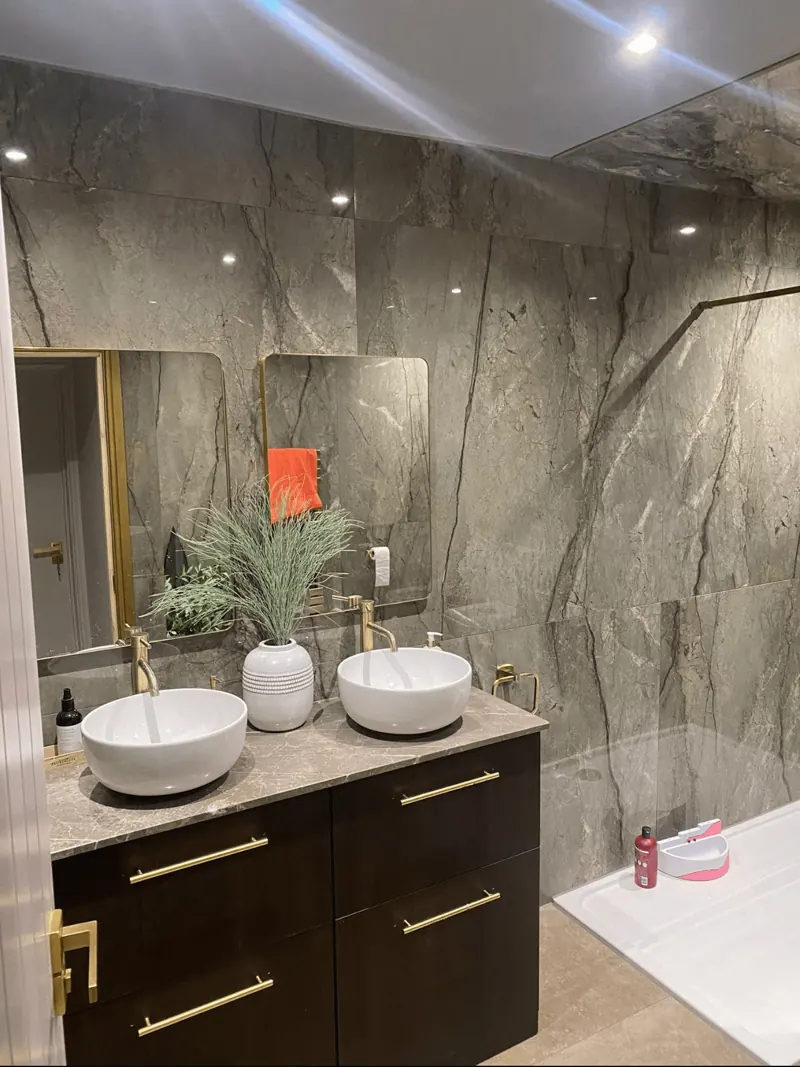
"transforming our outdated bathroom in to a showroom piece" (Josh M.)
We're rated 5.0 on Google from 18 reviews.
How to speed up your bathroom renovation
- Decide everything before the start date. Suite, tiles, taps, grout colour, towel rail, mirror. Grout colour sounds trivial until the tiler is stood waiting for an answer.
- Have it all delivered before strip-out. Open the boxes and check for chips and cracks when they arrive, not on the morning they're needed.
- Keep the layout if you can. Leaving the WC and bath where they are saves days of pipework.
- Pick tiles with time in mind. Standard sizes on a simple layout go up faster than large-format, herringbone or mosaic.
- Check your hot water first. If you're adding a power shower or a big rainfall head, make sure the boiler can keep up. Our guide to combi vs system boilers explains how each one copes with showers.
Planning a bathroom in Surrey or Berkshire?
We're based in Lightwater and fit bathrooms across Surrey and Berkshire, including Camberley, Woking, Guildford and Ascot. For smaller jobs like a leaking shower or a new tap, see our general plumbing page.
Have a look at finished rooms in our project gallery, or read more about our bathroom renovations in Surrey and Berkshire. Finance is available to spread the cost. For a timeline for your own room, contact us or call 07939 923815. The phone is answered 24/7.